About this course
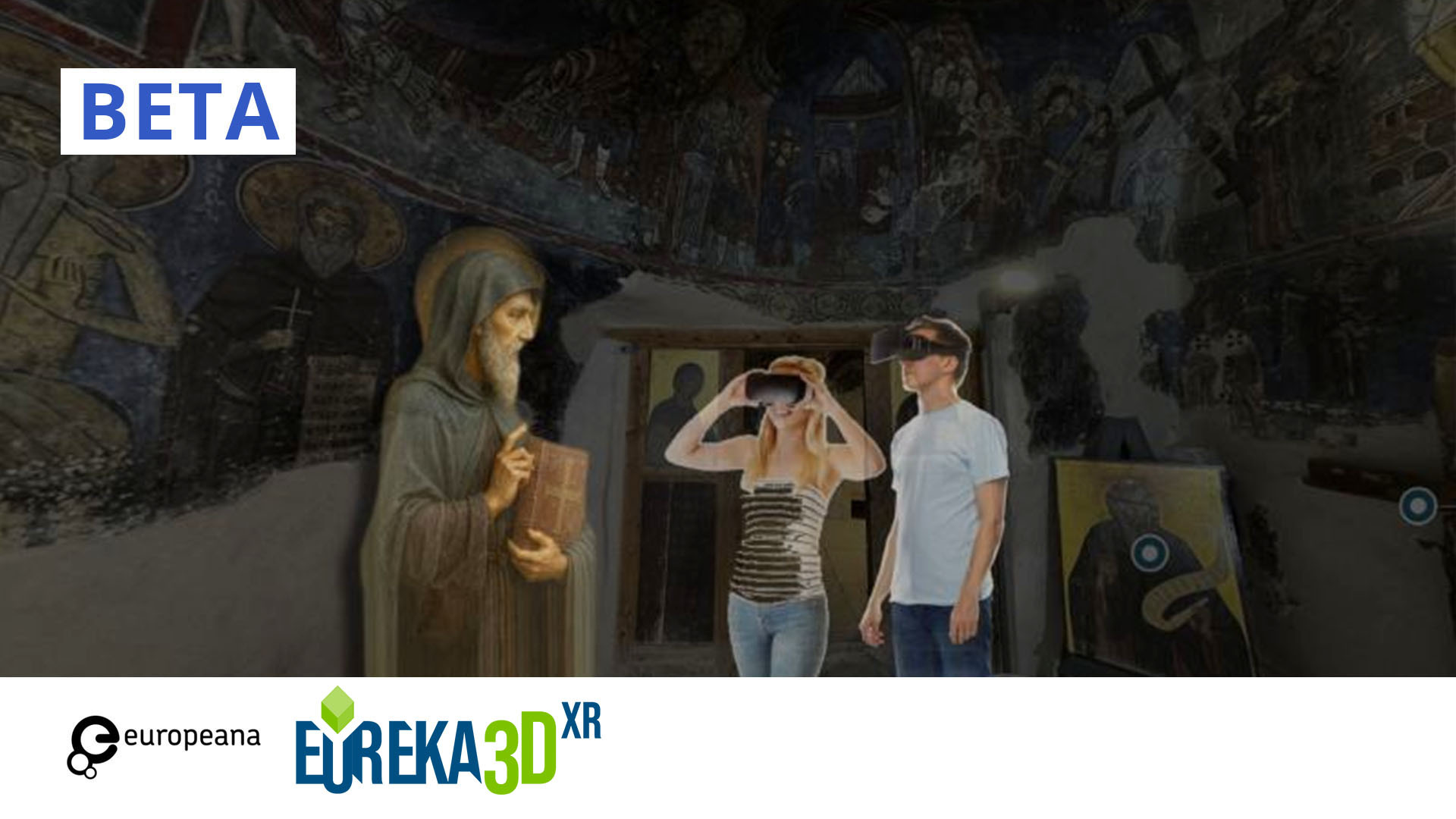
Extended Reality (XR) is creating new opportunities for museums, archives, libraries, archaeological sites and other cultural heritage organisations to present, interpret and share heritage in engaging ways. By combining high-quality digital assets with immersive technologies, XR can help audiences explore lost monuments, visualise hidden archaeological remains, interact with virtual guides and experience cultural heritage beyond the limitations of traditional interpretation.
This introductory course, developed as part of the EUreka3D-XR project, provides a foundation for understanding XR and its applications in cultural heritage. You will explore the core concepts of Extended Reality, discover why XR matters for heritage and become familiar with the EUreka3D-XR ecosystem and the tools that support the creation of XR experiences.
What you will learn
By the end of this course, you will be able to:
- explain the concept of Extended Reality (XR);
- distinguish between Augmented Reality (AR), Mixed Reality (MR), and Virtual Reality (VR);
- describe how XR can support preservation, accessibility, education, interpretation, engagement, research and other cultural heritage objectives;
- identify the main components of the EUreka3D-XR ecosystem;
- explain the role of the EUreka3D Data Hub and the EUreka3D-XR Toolbox within the EUreka3D-XR ecosystem;
- describe the capabilities of the five EUreka3D-XR tools;
- identify the purpose of the main EUreka3D-XR tools and when to use them; and
- recognise how different combinations of tools address different cultural heritage challenges.
Intended audience
The course is designed for anyone wishing to understand how XR can be applied in cultural heritage.
Prerequisites
No prior knowledge of XR technologies is required. The course is intended for beginners and focuses on concepts, applications and decision-making rather than technical implementation.
Assessment
Your understanding will be assessed through short quizzes at the end of each module. The course also includes an optional reflection activity that allows you to apply the concepts to your own use case.
Duration
Estimated study time: 2–3 hours
Delivery mode: Self-paced
What comes next
This course provides the conceptual foundation for the EUreka3D-XR learning pathway. In the next course, Planning XR Projects for cultural heritage, you will learn how to define project goals, identify audiences, design user journeys and select appropriate XR technologies for your own heritage project.
Licence and acknowledgements
Except where otherwise noted, this training resource is licensed under a Creative Commons BY-ShareAlike 4.0 license by the EUreka3D-XR project. Please refer to the image and media credits throughout the course for attribution and reuse information of these resources.
Course staff
Axelle Vanmaele
Axelle Vanmaele is expertise officer at meemoo, Flemish institute for archives. Meemoo offers a range of services related to digital heritage processes to its many partners and shares its expertise with a wide audience. In the latter case, Axelle represented meemoo in the EUreka3D-XR project, where she was responsible for capacity building in the areas of 3D and XR and the project’s results.
Jenske Verhamme
Jenske Verhamme works as a heritage database officer at meemoo, Flemish institute for archives. As part of his internship for the KU Leuven postgraduate programme 'Cultural Heritage: Digital Transformation', he joined the EUreka3D-XR project, where he supported Axelle Vanmaele, who acted as his supervisor both at meemoo and within EUreka3D-XR.
Beta version
This course is currently available as a beta release. We are actively reviewing and refining the content based on feedback from learners and experts. During this period, the course structure, activities and learning materials may be updated and improved.